.png)
Why Crab Island's Atmosphere Is Uniquely Vibrant

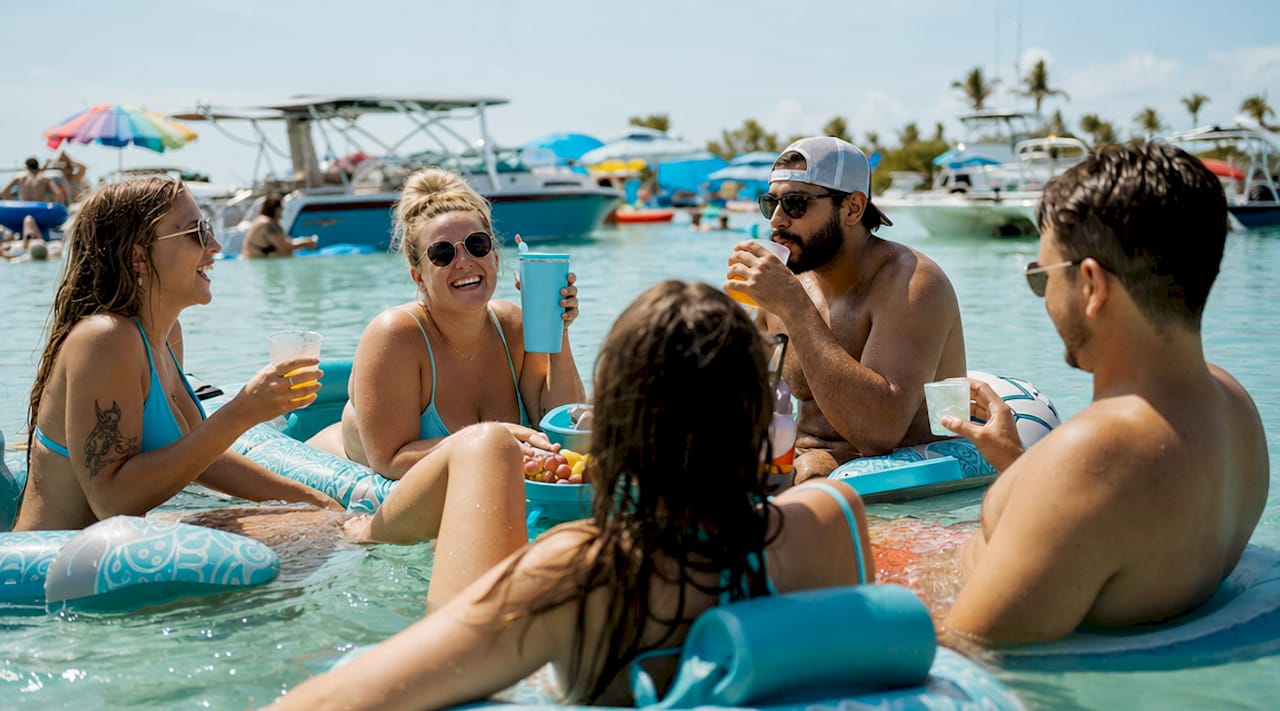
Crab Island’s atmosphere is defined by a rare combination of shallow emerald waters, a floating social scene, and a visitor mix that shifts from calm family mornings to full-on midday parties. This submerged sandbar off Destin, Florida delivers what no traditional beach can: a place where you anchor your boat, step into knee-deep Gulf water, and become part of a living, breathing social event. The Crab Island experience draws families, young adults, and party groups to the same stretch of water, creating a layered island ambiance that changes by the hour. Understanding why the Crab Island atmosphere is unique means understanding how nature, culture, and timing all work together.
Why does the Crab Island atmosphere feel so different?
Crab Island is a submerged sandbar, not a true island, and that distinction explains everything about its unique island atmosphere. Tidal inflows from the Gulf of Mexico and Choctawhatchee Bay keep the water clear, calm, and shallow enough to stand in. You are not sitting on a beach towel watching the water. You are in the water, surrounded by anchored boats, floating vendors, and hundreds of other visitors doing exactly the same thing.
The result feels less like a beach day and more like a floating block party with a Gulf Coast backdrop. The Emerald Coast’s signature blue-green water color adds a visual intensity that photographs cannot fully capture. Visitors consistently describe the scene as unlike anything they have experienced at a standard Florida beach, and that reaction is grounded in the geography itself.
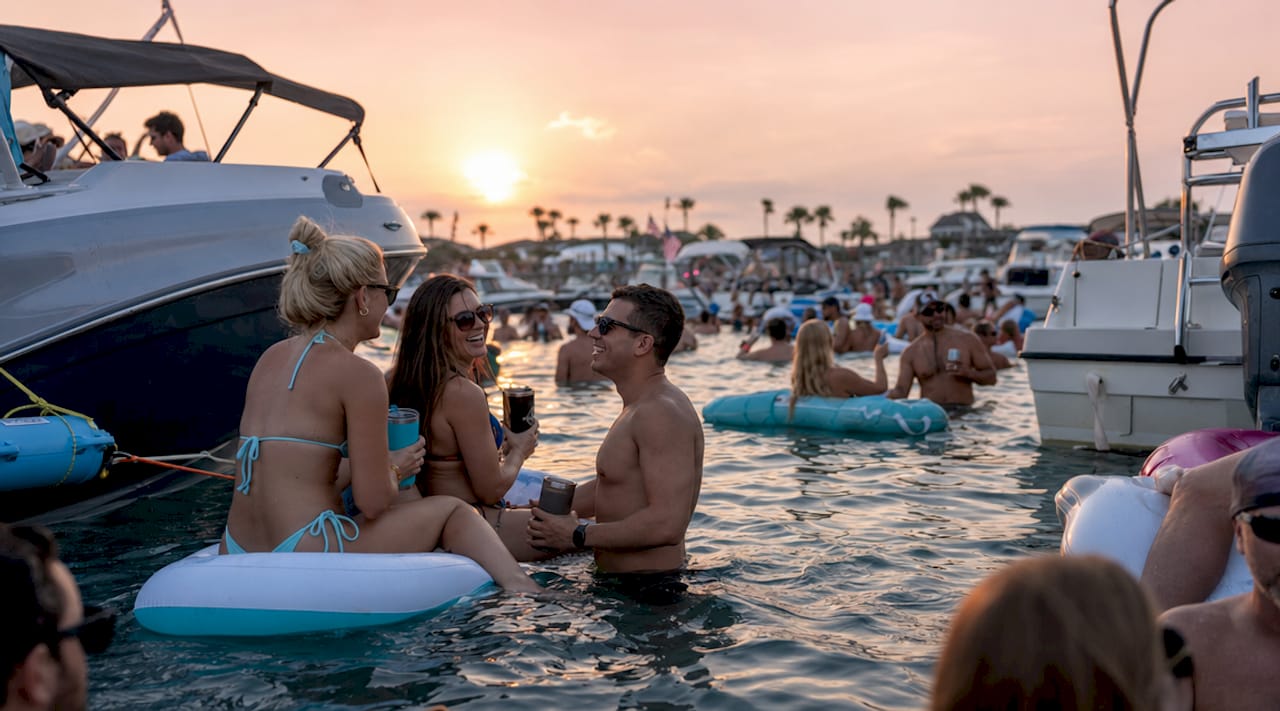
How does the atmosphere at Crab Island vary throughout the day?
The Crab Island vibe is not a single, fixed experience. It is a sequence of distinct moods that rotate across the same sandbar within a single day.
Early morning (8 to 11 a.m.): Quiet mornings enable families to float and swim safely, with easier anchoring and more room between boats. The water is clearest at this hour, the noise level is low, and the crowd is thin. This window is the best entry point for visitors with young children or anyone who wants the scenery without the spectacle.
Peak social hours (11 a.m. to 2 p.m.): Morning calm gives way to packed boats, loud music, and dense social energy. This is the period most people picture when they think of Crab Island vibes. Anchoring space shrinks fast, and the noise level rises sharply.
Mid to late afternoon: The crowd remains large but begins to thin after 3 p.m. Energy stays high, but the frantic peak softens into something more relaxed.
Sunset hours: Boat traffic drops significantly. The light on the water turns golden, and the remaining visitors tend to be the most laid-back crowd of the day.
The time-segmented nature of the atmosphere is one of the most underappreciated features of Crab Island. You are not locked into one experience. You choose your window, and the sandbar delivers a completely different mood.
Pro Tip: Arrive before 10 a.m. if you are traveling with children or want a quieter float. Arrive at 11 a.m. if you want the full social spectacle. The difference between these two arrival times is dramatic.
What natural features make Crab Island’s atmosphere so striking?
The physical environment at Crab Island does most of the atmospheric work before a single boat drops anchor. The sandbar sits at the intersection of two water bodies, and that positioning creates conditions that are genuinely rare.
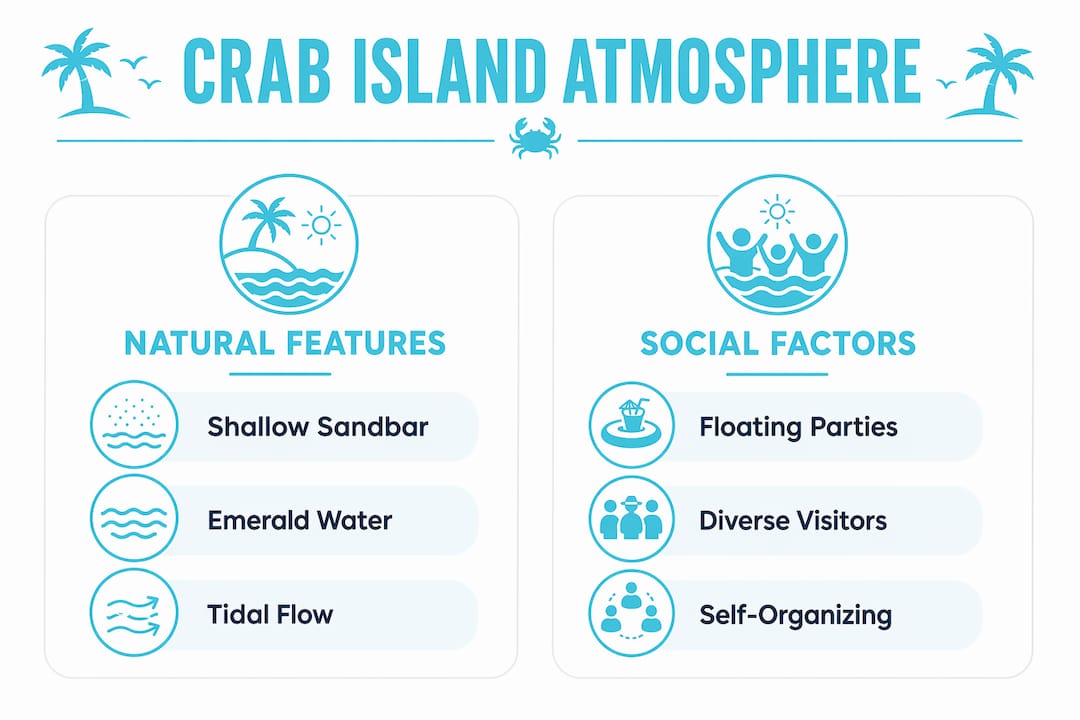
Natural Feature | Atmospheric Effect |
Shallow sandbar depth | Visitors stand and float freely, enabling social interaction at water level |
Tidal inflow from Gulf of Mexico | Water stays clear and refreshing throughout the day |
Emerald-green water color | Creates a visually striking backdrop that intensifies the mood |
High tide water clarity | Water is clearest near high tide, cooler and more vibrant for swimming |
Proximity to Destin Harbor | Easy boat access concentrates visitors and creates a natural gathering point |
The shallow depth is the single most important factor. At most beaches, the water is a backdrop. At Crab Island, the water is the venue. Visitors spend hours standing in two to four feet of water, which removes the physical barrier between people and turns the entire sandbar into one continuous social space.
Pro Tip: Check the tide chart before you go. High tide delivers the clearest, most visually impressive water. Low tide can reduce depth significantly in some areas, which affects both swimming and the overall visual appeal.
How do social and cultural factors shape the Crab Island experience?
The natural setting creates the stage, but the people create the show. Crab Island draws a genuinely diverse crowd, and the way that crowd organizes itself is one of the most fascinating aspects of the destination.
Visitor groups self-segregate by music preference and vessel size, forming identifiable micro-communities across the sandbar. Country music plays from one cluster of boats. Hip-hop pumps from another. Families with young children anchor near the edges where the water is shallowest and the noise is lowest. This organic zoning means the sandbar contains multiple distinct atmospheres simultaneously. You can move 50 yards and find a completely different vibe.
Floating vendors and restaurants add a commercial layer that most outdoor water destinations lack. Food, drinks, and entertainment arrive by boat, which reinforces the festive, marketplace quality of the scene. The atmosphere carries what many visitors describe as a Jimmy Buffett-esque quality: casual, communal, and unapologetically fun.
“It felt like a neighborhood block party that happened to be floating in the most beautiful water I’ve ever seen.” This kind of reaction, repeated across thousands of visitor accounts, captures what makes Crab Island culture genuinely distinct from any other beach destination in the United States.
Social media amplified the destination’s profile significantly, and increased popularity brought overlapping regulations and higher visitor volume that complicated the balance between family-friendly and party atmospheres. Managing that tension is now an active challenge for local authorities. The sandbar that once felt like a hidden local secret now operates as a modern public commons, with all the complexity that implies.
What practical advice helps you get the most from Crab Island?
Knowing what makes Crab Island special is only useful if you can translate it into a well-planned visit. These steps will help you match the experience to what you actually want.
Decide your vibe before you book. If you want calm water and family time, target an early arrival. If you want the full social experience, plan for midday. The atmospheric features of Crab Island are time-dependent, and your booking decision should reflect that.
Choose a captained charter over a self-driven rental. Charters handle anchoring, navigation, and timing, which removes the biggest sources of stress for first-time visitors. Self-navigating in a crowded, shallow sandbar with heavy boat traffic is genuinely difficult if you are not experienced.
Navigate by sound to find your zone. Walk or float toward the music that matches your mood. The micro-community structure of the sandbar means you can locate your preferred atmosphere by listening before you anchor.
Respect vessel traffic and sanitation rules. Crab Island operates under active regulations covering boat speed, anchoring zones, and waste disposal. Violations carry real penalties and degrade the experience for everyone.
Bring water shoes. The sandbar bottom is uneven and can include shells and debris. Water shoes protect your feet and make moving between boats significantly easier.
Pro Tip: Use the Crab Island sandbar visit guide to check current conditions, tide times, and any active regulations before your trip. Conditions change seasonally, and 2026 has seen updated anchoring rules in peak zones.
Key takeaways
Crab Island’s atmosphere is unique because its shallow sandbar geography, time-segmented social energy, and self-organizing visitor culture combine to create an experience no standard beach or marina can replicate.
Point | Details |
Timing determines your experience | Mornings are calm and family-friendly; midday delivers peak social energy and crowds. |
Geography is the foundation | Shallow tidal water, emerald clarity, and easy boat access create the physical conditions for the atmosphere. |
Visitor tribes self-organize | Music preference and vessel size naturally cluster visitors into distinct zones across the sandbar. |
Captained charters reduce friction | Professional navigation and anchoring let you focus on the experience rather than logistics. |
Social media changed the crowd | Increased visibility brought higher volume and regulatory complexity that visitors should plan around. |
What I’ve learned from watching Crab Island evolve
I have been writing about Gulf Coast travel for years, and Crab Island is the destination that surprises me most consistently. Not because it is always perfect, but because it is always honest. The sandbar does not pretend to be something it is not. It is loud at noon, beautiful at 9 a.m., and chaotic on holiday weekends. That transparency is rare in travel destinations, which tend to market only their best moments.
What strikes me most is the self-organizing quality of the crowd. Nobody assigns zones. Nobody enforces the music-based clustering. It happens because people naturally seek their tribe, and the open water gives them room to do it. That is a social phenomenon worth paying attention to, not just a fun beach quirk.
The preservation challenge is real and growing. The same qualities that make Crab Island special, the open access, the shallow water, the concentrated social energy, also make it fragile. Regulatory efforts are increasing, and that is the right response. But visitors carry responsibility too. The atmosphere you experience depends partly on how you and everyone around you behave while you are there.
My honest advice: go early at least once, even if you think you want the party. The morning version of Crab Island is something different entirely, and most visitors who see it say it changes how they understand the whole destination.
— Troy
Experience Crab Island without the stress
Planning a Crab Island visit is straightforward when you have the right setup. Crab-island-tours offers affordable, captained party boat tours that handle every logistical detail so you can focus entirely on the experience.
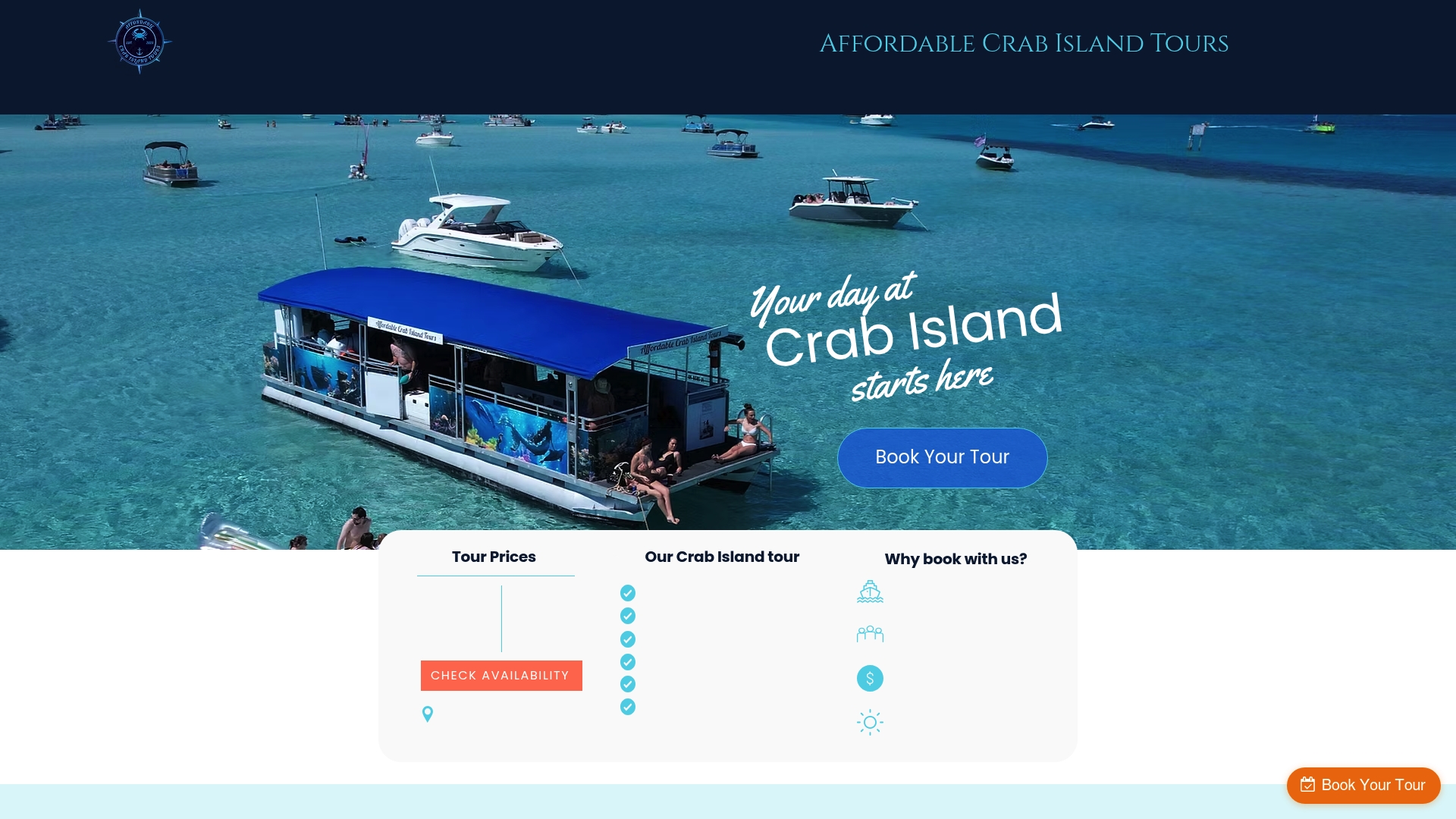
The package includes floats, an onboard restroom, and experienced captains who know exactly where to anchor and when to arrive for the best conditions. Families, couples, and groups all find the format works for them because the crew adapts to what you want from the day. Skip the rental stress and the navigation headaches. Book your Crab Island party boat tour with Crab-island-tours and show up ready to enjoy one of Florida’s most distinctive water destinations.
FAQ
What makes Crab Island’s atmosphere different from a regular beach?
Crab Island is a submerged sandbar where visitors anchor boats and socialize in shallow, clear water rather than sitting on shore. The combination of floating vendors, music zones, and open water access creates a social environment that no standard beach replicates.
What time of day is best for a family visit to Crab Island?
Early morning, between 8 and 11 a.m., offers the calmest conditions with more anchoring space, lower noise levels, and clearer water. Families with young children consistently find this window the most comfortable and enjoyable.
Is the water at Crab Island actually clear?
Yes. Tidal inflows from the Gulf of Mexico keep the water clear and refreshing, and clarity peaks near high tide when cooler Gulf water flows in. Checking the tide chart before your visit helps you time your arrival for the best water conditions.
Do I need to rent a boat to visit Crab Island?
You need a boat to reach Crab Island, but you do not need to rent and operate one yourself. Captained charters and guided tours handle navigation and anchoring, which is the recommended option for first-time visitors or anyone who wants a stress-free experience.
How crowded does Crab Island get in peak season?
Peak hours from 11 a.m. to 2 p.m. during summer weekends bring very high boat density and significant noise levels. Arriving before 10 a.m. or after 3 p.m. reduces crowd exposure considerably while still delivering the core Crab Island experience.
Recommended
Comments